Speaking & Advising

An evidence‑based voice on enterprise AI.

Keynotes, executive sessions, and advising on AI strategy, adoption, and organizational change. Arvind’s talks draw on years of fieldwork inside companies adopting AI, not forecasts, so they focus on what actually moves value and adoption: strategy, structure, roles, and metrics.

  • Thinkers50 Radar
  • Stanford MS&E
  • Faculty affiliate, Stanford HAI
  • Digital Economy Lab
Arvind Karunakaran

Executive sessions for leaders at

McKinsey & Company Boston Consulting Group Accenture Walmart PepsiCo Barclays Charles Schwab Novo Nordisk

Research in ASQ, Organization Science, and HBR · Covered by The New York Times, The Wall Street Journal, The Washington Post, the Financial Times, and MSNBC

Signature talks

Six talks on making AI work inside organizations

Every talk can be delivered as a keynote or expanded into a working session, and each is tailored to the audience and industry.

Signature framework

The Workflow Redesign Playbook

Redesigning work around AI with the people who do it

Most AI programs automate isolated tasks and leave the workflow around them untouched, which is where the gains stall. Arvind’s playbook starts from the work itself. Teams map a workflow task by task, decide where AI should substitute for, augment, or expand the work, and then redesign roles, hand-offs, decision rights, and metrics with the people who do it, so the change holds after the pilot ends. It is the core of his in-house workshops with leadership teams.

Formats
Keynote, or a hands-on working session (half or full day) built around the team’s own workflows
Best for
COOs and transformation leaders, functional heads, HR and change leaders, in-house AI programs

Same Models, Different Results

Where lasting AI advantage comes from

Every competitor can buy the same frontier models at the same price, so model access alone builds nothing durable. Drawing on multi-year research inside enterprises, Arvind shows what does compound: proprietary data, encoded enterprise context, and evaluation systems that define “good” in your own domain. Leaders leave knowing what to own, where to stay deliberately swappable, and which three moves to make next.

Best forCEOs and boards, leadership offsites, strategy summits

Escaping Pilot Purgatory

Turning AI experiments into enterprise value

Most enterprises now have dozens of AI pilots, yet few have moved the P&L. This talk explains why initiatives stall between demo and production (unclear ownership, untouched workflows, decision rights no one redesigned) and lays out a research-based playbook for scaling: build-buy-partner choices, the right operating model, and the organizational changes that make AI stick.

Best forTransformation and technology leaders, COOs, internal AI summits

Stop Selling AI as a Productivity Tool

How leaders get people to embrace AI

In a study of nearly two years inside a law firm, two near-identical teams received the same AI tool. The team whose manager framed it as a way to enrich their jobs, and backed that up with time, training, and new metrics, used it 58% more and experimented with it 70% more. Arvind explains why productivity framing backfires and what leaders must change to get real adoption.

Best forAll-hands meetings, HR and people leaders, change programs, association conferences

What Is AI Really Worth?

Measuring value, not volume

Time saved, tokens consumed, and seats licensed are easy to count, and they reward the wrong behavior. Arvind shows where claimed productivity gains quietly evaporate into downstream rework, why the biggest returns come from expanding and reconfiguring work rather than substituting for it, and how to build metrics that connect AI to customers, revenue, and capacity.

Best forCFOs, finance and operations leaders, boards, customer and investor events

Agentic AI in the Enterprise

From demo to dependable

AI agents demo beautifully, then stall. This talk explains why agentic initiatives break at the hand-offs between agents, systems, and the people accountable for outcomes, and what separates the firms that scale them: orchestration patterns, human-in-the-loop controls, evaluation infrastructure, and governance that keeps domain experts engaged rather than sidelined.

Best forCIO/CTO forums, technology and operations leaders, AI conferences

The Organization Is the Bottleneck

Leading change in the AI era

AI changes who holds expertise, who has authority, and whose work gets valued. That is why initiatives stall even when the technology works. Using three lenses (organizational design, power and politics, and culture), Arvind helps leaders diagnose the real barriers to adoption and redesign roles, hand-offs, and incentives with the people who do the work.

Best forLeadership development programs, HR and change leaders, executive education

Sample talks and panels

See Arvind on stage

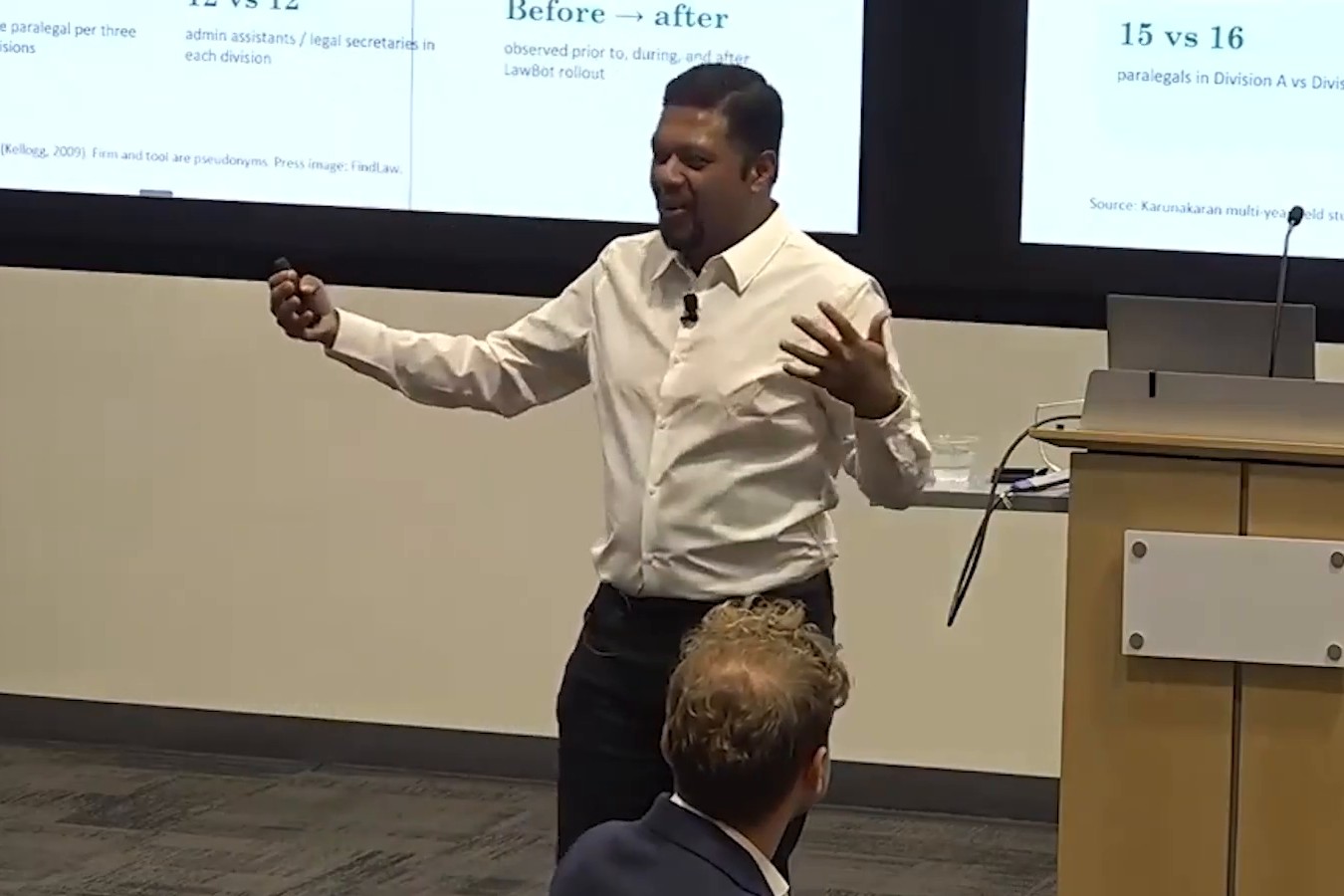
Speaker reel · 2 min

Arvind on stage

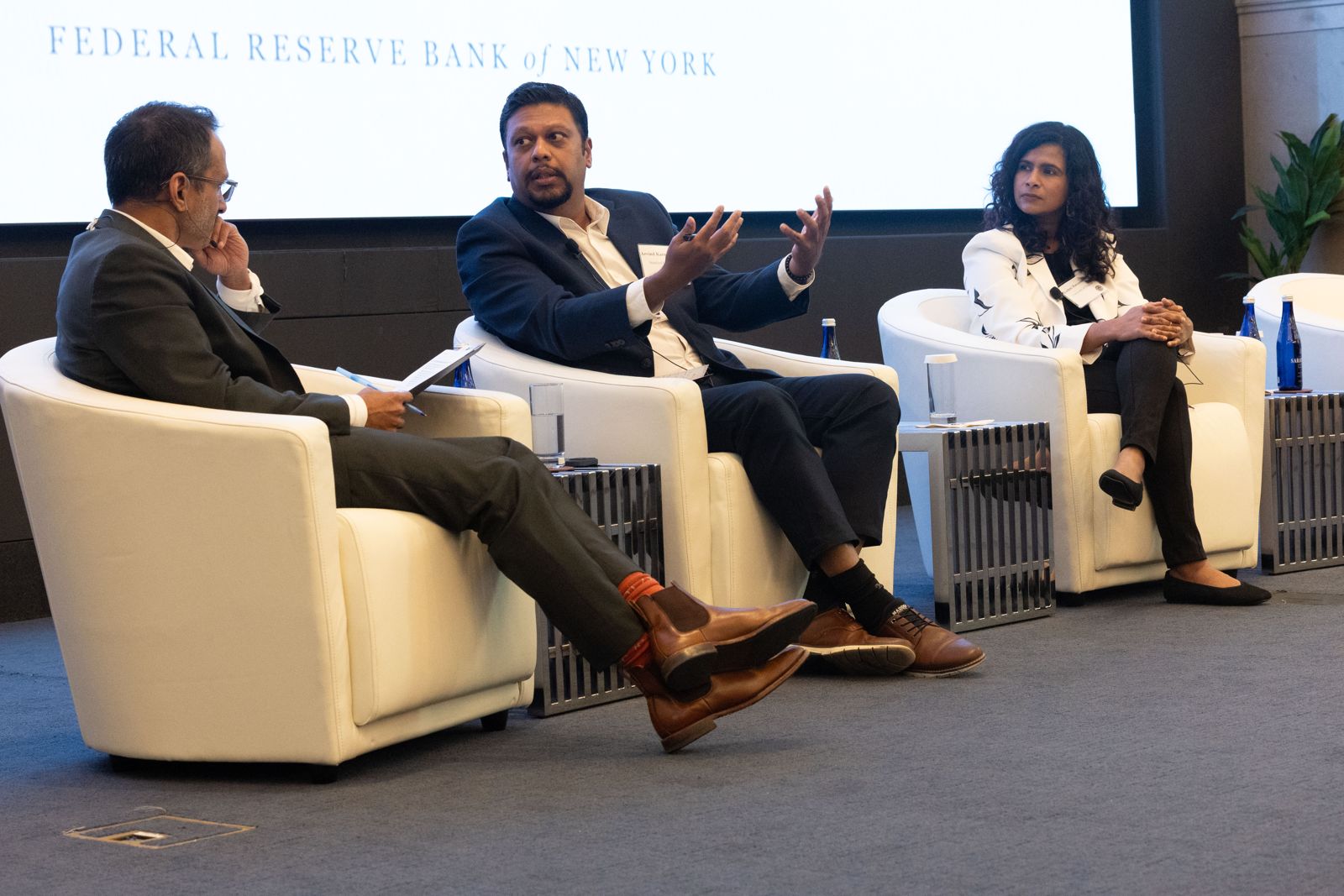
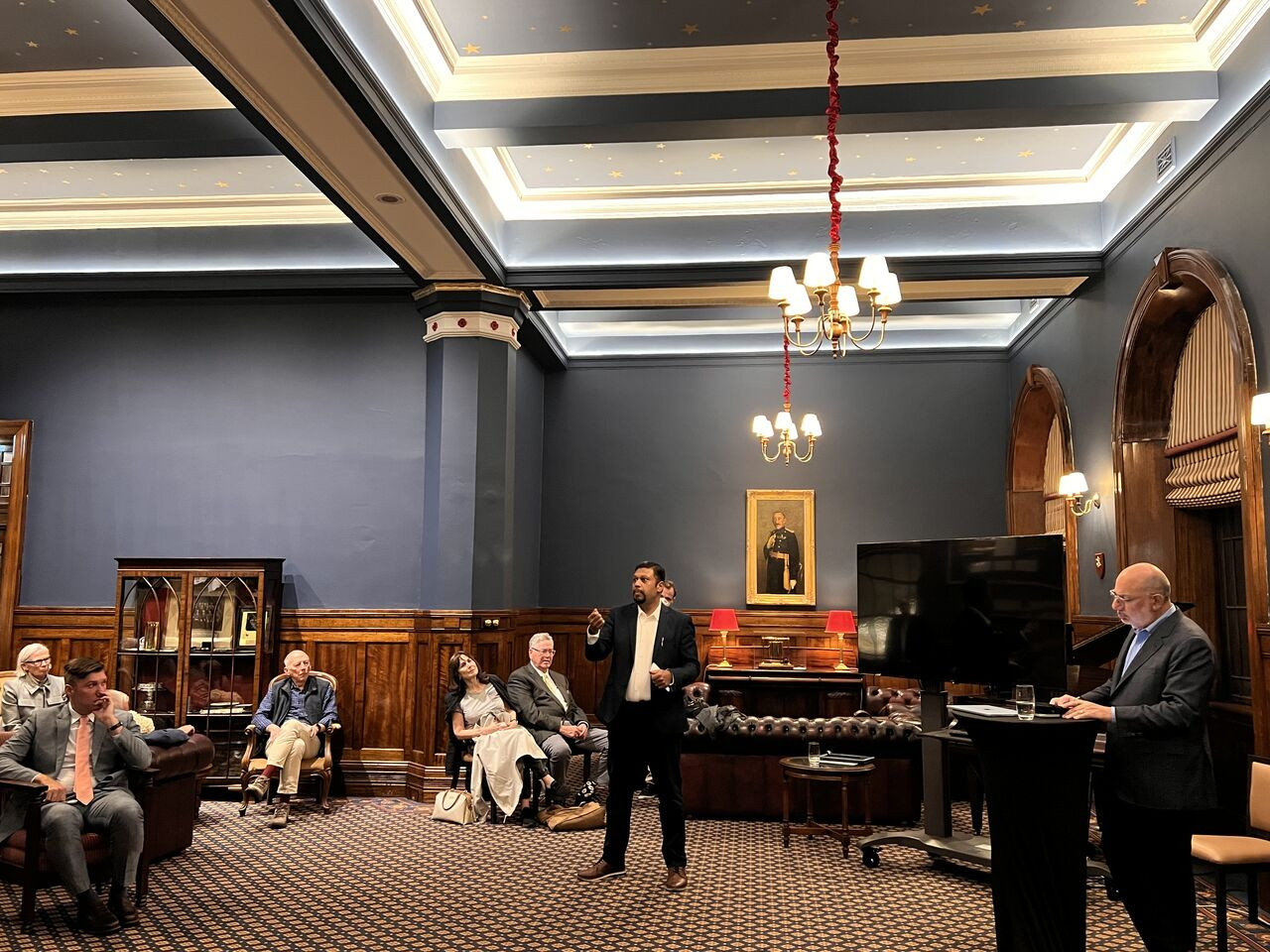
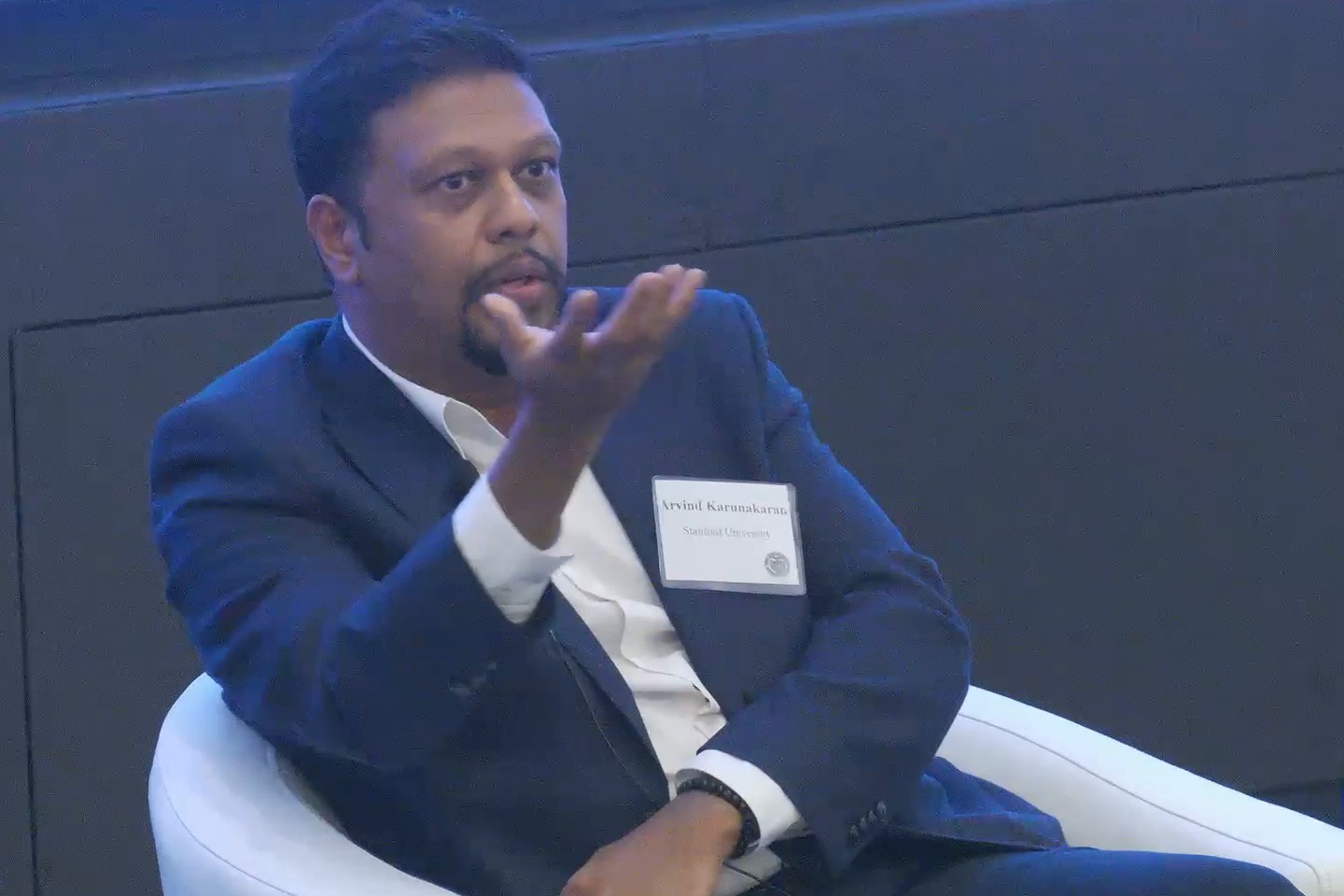
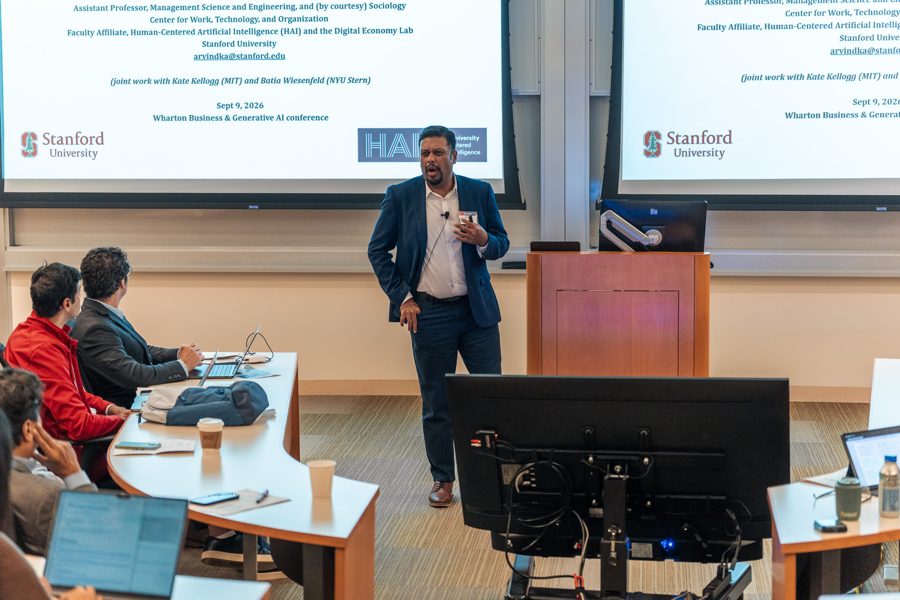
Highlights from a Stanford HAI seminar and a panel at the Federal Reserve Bank of New York, opening with an overview of his research and his framework for job, workflow, and organizational redesign.

Arvind Karunakaran speaking on a panel at the Federal Reserve Bank of New York
Panel · Federal Reserve Bank of New York · Oct 6, 2026

AI in the Workplace: Behaviors, Incentives & Inequality

Governance & Culture Reform Conference. Moderated by Kartik Athreya, Head of Research & Statistics at the New York Fed, with Roshni Raveendhran (UVA Darden).

Starts where Arvind begins speaking (2:56:39 in the full recording).

Arvind Karunakaran speaking on a panel at the Imagination in Action AI Summit at Google
Panel · Imagination in Action AI Summit at Google · Sept 14, 2026

Who Does the Work Now

Starts at Arvind's first answer (4:16 in the full recording).

Jump to his answers

From the field

Same AI tool. Two near‑identical teams. Very different adoption.

In a study of nearly two years inside a law firm, the team whose manager framed AI as a way to enrich their jobs, and backed that up with time, training, and new metrics, pulled far ahead.

Read the Stanford HAI coverage

58%

more use of the same AI tool

70%

more experimentation with it

Formats

From a keynote to a multi-day program

In person or virtual. Every engagement is tailored after a short scoping call with the sponsor.

  • Keynote

    45–60 min

    A research-based talk for conferences, offsites, and all-hands meetings.

  • Interactive executive session

    90 min

    Frameworks and enterprise cases, with discussion built around the group’s own challenges.

  • Working session

    Half or full day

    The team leaves with something built: a value map, a 12-month roadmap, or a maturity diagnosis.

  • Executive program

    Multi-day

    Sessions combined into a program for leadership teams and executive education.

Executive education

Executive session catalog

Sessions most often requested for executive education and in-house programs.

IAI strategy & execution

AI Strategy and Execution: From Vision to Enterprise Value
An enterprise-wide framework for managing AI as a strategic asset: the three waves of AI (predictive, generative, agentic), build-buy-partner choices, escaping “pilot purgatory,” and connecting AI to measurable value. Closes with a 90-day roadmapping exercise.
Leading with AI: Executive Visioning & Roadmapping
A working session for leadership teams on where durable advantage comes from in an AI-driven market, followed by a structured visioning and roadmapping exercise on a five-stage AI maturity model.

IIBuilding & scaling enterprise AI

Enterprise AI to Create Business Value
A “three lenses” framework (strategic design, power and politics, and culture) to structure, scale, and redesign work around AI, including machine-in-the-loop workflows and operating-model choices.
Agentic AI in Enterprises: Adoption, Orchestration & Scaling
Why agentic initiatives stall between pilot and production, and how leaders handle orchestration (multi-agent coordination, human-in-the-loop controls, evaluation infrastructure) and scaling across functions.

IIIPeople, work & organizational change

AI, Change Management & Organizational Transformation
The change management behind building in-house AI capability: why internal efforts stall, how to design the division of labor across the AI stack, and why to reorganize workflows rather than automate isolated tasks.
Reskilling, Role Redesign & Human–AI Augmentation
The “last-mile” problem of adoption and a task-first approach to reskilling and role and workflow redesign, anchored by a hands-on task-mapping exercise.

IVGovernance, metrics & value

Organizational Governance, Implementation & Use of AI
Two frames for capturing value (substitution versus pie expansion), governing across the AI stack, and navigating the “jagged frontier” of AI capability.
Metrics for Measuring Value from AI
Why input-centric metrics (time saved, tokens, lines of code) backfire, and two better anchors: the dollar value of higher-value work performed per role, and business-unit capacity expansion.

Selected clients

Executive sessions for leaders at organizations including

Professional services

McKinsey & Company Boston Consulting Group Accenture PwC Deloitte Infosys

Financial services

Barclays Charles Schwab TIAA National Australia Bank Bank of New Zealand

Consumer & retail

PepsiCo Unilever Walmart Nike Henkel

Healthcare & life sciences

Novo Nordisk DaVita American Heart Association

Stages & appearances

Where Arvind has spoken

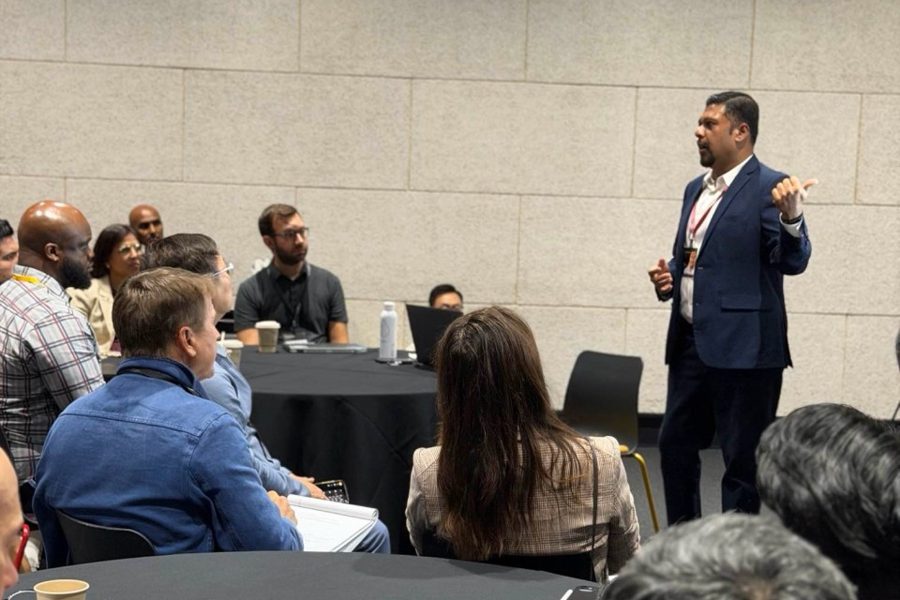
Nearly 50 talks, keynotes, and workshops in the past year, from industry stages and in-house corporate workshops to executive education programs across five Stanford schools: Engineering, Business, Law, Medicine, and Education.

  • The AI Summit New York
  • Imagination in Action AI Summit at Google
  • World Economic Forum
  • Federal Reserve Bank of New York
  • Wharton Business & Generative AI Conference
  • Harvard Business School
  • MIT Sloan
  • Columbia Business School
  • Institute for Advanced Study (Princeton)
  • Stanford HAI

Upcoming & recent

Earlier engagements

  • 2022–2025
    Stanford “AI at Work” workshop series

    Sessions include “Generative AI in the Workplace: Redesigning Work and Organizations” and “Three Lenses on Structuring and Scaling AI Initiatives.”

  • 2024
    McKinsey–Stanford HAI workshop

    Keynote: “Reskilling and Role Redesign in the Age of Generative AI.”

  • 2023
    Stanford HAI workshops with McKinsey, PepsiCo, and Google
  • 2023
    Notre Dame–IBM Technology Ethics Lab

    Keynote: Symposium on the Ethical Use of Foundation Models in Enterprises. Watch the keynote

  • 2023
    American Bar Association conference on AI

    Invited panelist.

  • 2023
    National Academies of Sciences, Engineering, and Medicine

    Panel on multidisciplinary collaboration and technology, Board on Human-Systems Integration.

  • 2022
    The AI Summit New York

    Keynote, two keynote panels (“Who Decides the Future of AI?” and “Data Science and AI in Business”), and a fireside chat.

For organizers

Speaker bio

Copy-ready bios and an emcee introduction. High-resolution headshots and event photos are available on request. A one-page speaker sheet and a set of photos are below to download.

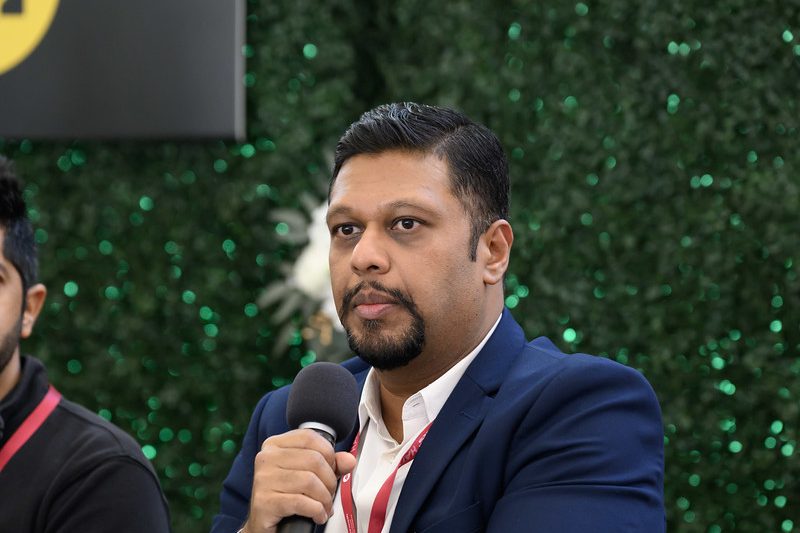
Headshot of Arvind Karunakaran
Hi-res headshots: email to request

Arvind Karunakaran is an Assistant Professor of Management Science & Engineering (and, by courtesy, Sociology) at Stanford University, and a faculty affiliate of the Stanford Institute for Human-Centered AI (HAI) and the Stanford Digital Economy Lab. Named to the Thinkers50 Radar, he studies what actually happens inside organizations when they adopt AI, and why the bottleneck is rarely the technology. His multi-year field research explains why AI pilots stall between demo and production, why conventional ROI metrics reward usage instead of value, and how leaders redesign roles, workflows, and governance so that AI gains compound.

His work appears in Administrative Science Quarterly, Organization Science, Research Policy, and Harvard Business Review, and has been covered by The New York Times, The Wall Street Journal, The Washington Post, the Financial Times, and MSNBC. He has led executive sessions for leaders at McKinsey, BCG, Accenture, Walmart, PepsiCo, Nike, Barclays, Charles Schwab, and Novo Nordisk. A computer science engineer by training with prior work experience in the technology and consulting industries, he holds a master’s in Information Science and Technology from Penn State and a PhD in Management (Information Technology and Organizations) from the MIT Sloan School of Management.

Short bio for programs and listings

Arvind Karunakaran is an assistant professor at Stanford University and a faculty affiliate of the Stanford Institute for Human-Centered AI (HAI). Named to the Thinkers50 Radar, he draws on multi-year field research inside companies to show leaders why most AI initiatives stall before they reach the P&L, and what it takes in strategy, structure, roles, and metrics to turn AI into lasting value. He received his PhD from the MIT Sloan School of Management.

Introduction for an emcee to read aloud

“Our next speaker studies what really happens when companies bring AI into the workplace: not in the lab, but inside the teams that have to make it work. Arvind Karunakaran is on the faculty of Stanford University in Management Science and Engineering, and is a faculty affiliate of Stanford’s Institute for Human-Centered AI. He was named to the Thinkers50 Radar, the global list of management thinkers shaping the future of business. His research has been published in Harvard Business Review and covered by The New York Times, The Wall Street Journal, and The Washington Post, and he works with leadership teams at organizations from McKinsey and Accenture to Nike and PepsiCo. Please join me in welcoming Arvind Karunakaran.”

Startup advising

Technical and strategic advice for early-stage founders

Arvind advises early-stage startups, helping founders make sound product, go-to-market, and organizational decisions as they build and scale.

01

AI

Where AI creates durable advantage, and how to build products and capabilities around it rather than bolting it on.

02

Agentic governance

Oversight, accountability, human-in-the-loop controls, and evaluation for AI agents that act with increasing autonomy.

03

Deployment

Moving from prototype to production: architecture, integration with existing workflows, and the operating model needed to run AI reliably.

04

Adoption

Why users and organizations resist or underuse new technology, and how to design for trust, training, and workflow change.

05

ROI

Measuring the value of AI beyond usage metrics, and tying it to cost, revenue, and capacity outcomes.

06

Platforms and two-sided markets

Network effects, pricing, governance, and balancing the needs of both sides of a market.

Enquire

Planning a keynote, executive session, workshop, or advisory engagement?

Email Arvind with the details you have in mind.

  • Date
  • Location
  • Audience
  • Format
Email Arvind

arvindka@stanford.edu